What Casey Neistat Taught Me About Finding Stories
The best stories don't come from brainstorming.
 5 min read
The best stories don't come from brainstorming.
5 min read
I watched my first Casey Neistat video this week. And it changed how I think about storytelling for founders.
I know. I've been living under a rock. But here's how it happened.
I live in New York now, and when you're around creators in this city, Casey's name comes up constantly. He's the reference point. The person everyone cites when they talk about who inspired them to start creating. I'd heard the name a hundred times but never actually watched anything.
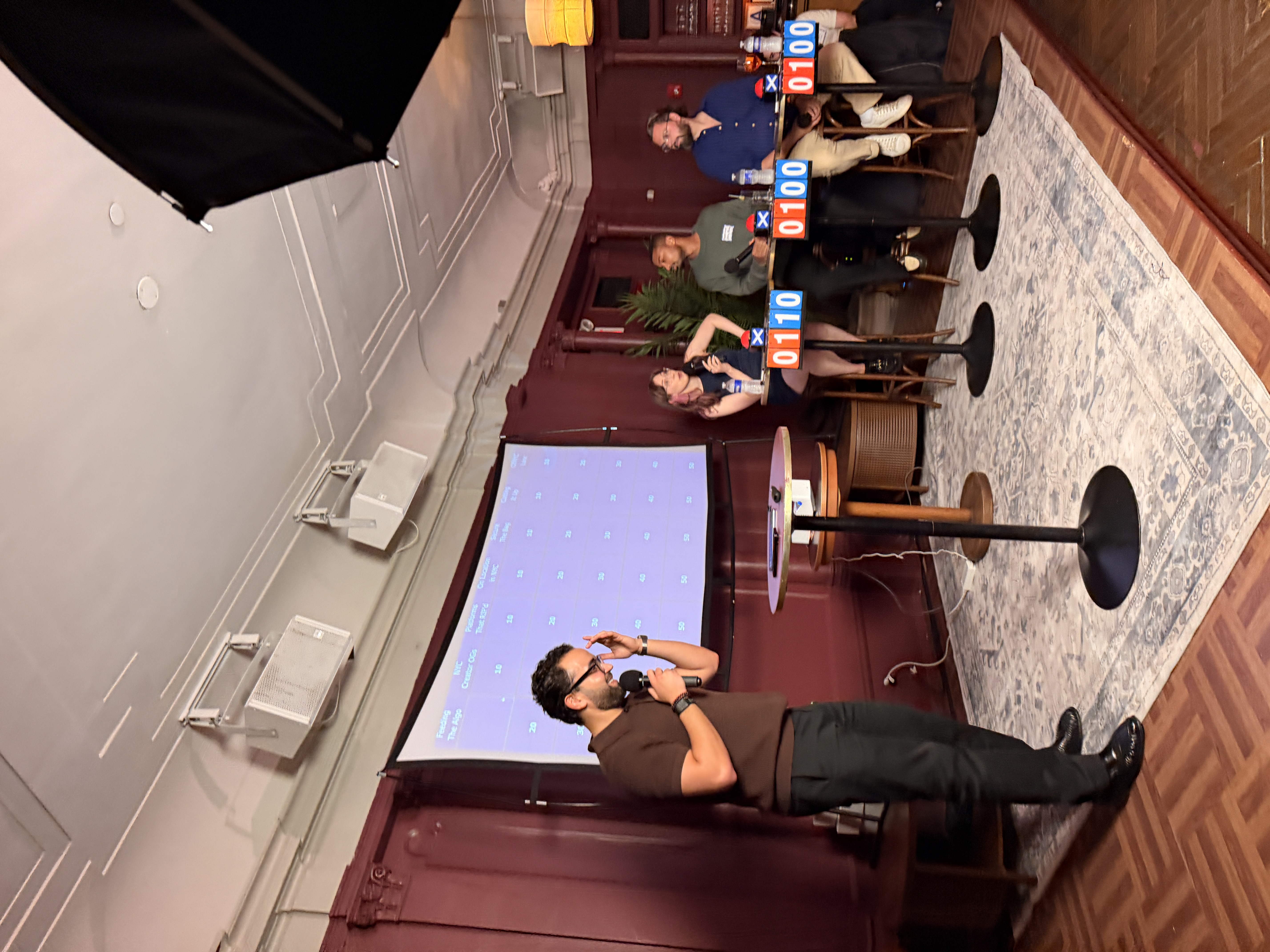
Then I was at the Creator Economy NYC meetup in May, and somebody mentioned that Casey's studio is in this famous building on Broadway, same building as a bunch of other creators. I got curious. Saw a thumbnail. Hit play.
And I could not stop watching.
As someone who extracts stories from founders for a living, I was studying him. His pacing, his structure, how he pulls stories out of moments that most people would walk right past. The man has 12.7 million subscribers and over 3 billion total views across 1,100+ videos. He published 534 consecutive daily vlogs starting in 2015 and essentially pioneered narrative-driven vlogging. Nobody had consistently applied a three-act structure to daily vlogs before him. He's been doing this for years. Not trending for a month and disappearing. Years.
Two things became very, very clear.
Here's the pattern I see constantly with the founders I work with. They sit down, open a blank page, and try to think of something to post. They scroll through Instagram looking at what their competitors are doing. They screenshot posts that did well and try to reverse-engineer them. And then they feel stuck because nothing feels authentic or interesting or worth saying. I'm guilty of this too.
That's because they're looking in the wrong place.
The best stories don't come from brainstorming sessions. They come from moving through the world. Every time I leave the house and talk to someone, I get inspired. Every single time. Casey Neistat makes 3-4 videos a week because he's constantly out there. Interacting with people. Going places. Staying curious about small things and big things.
This is the part most founders skip. They want to create content, so they sit at their desk trying to create content. But content creation doesn't start at the desk. It starts by paying attention to your life. The conversation you had with a customer that surprised you. The decision you almost didn't make. The thing you noticed on a random Tuesday that connected to something bigger.
The second thing I noticed is structural. And it's something I think about a lot in my own work.
Every single one of Casey's videos follows the same basic framework. Beginning, middle, end. Setup, conflict, resolution. If you've seen my Story ARC™ framework (hook, backstory, rising action, climax, resolution), it's the same DNA. He uses it in every single video, even on a mundane Tuesday.
But there's something specific underneath the structure that makes it actually work. Every video opens with an unanswered question. And that question is the reason people keep watching. They're waiting for the payoff.
Psychologist George Loewenstein calls this the information gap. When you perceive a gap between what you know and what you want to know, your brain can't rest until it closes it. That's exactly what a good unanswered question does.
In one of his recent videos, he went to El Salvador for a surf trip. The question wasn't about surfing technique or travel tips. It was: "How do you absolve the guilt of going on a surf trip without your wife and family on Mother's Day?"
That's it. Something that small carries an entire video. Because once that question is in your head, you need to know the answer.
There's a great breakdown by Jeff Fogel where he sits with Casey in his studio and goes through one of his videos frame by frame. At one point Jeff says something that stuck with me: "When I watched the first three minutes of your video, it feels like something important is about to happen. I have no idea what is about to happen, but it feels like it's gonna be important."
That feeling? That's the unanswered question doing its job.
If you watch the full breakdown, you'll see Casey spend five minutes making you care about someone before ever revealing the ask. Most founders do the opposite. They lead with the pitch. But you have to earn the right to ask. And you earn it through story.
If you take nothing else from this, take these five questions. Ask them before you create anything.
What happened this week that made me feel something?
Don't brainstorm content. Look at your actual life. Surprise, frustration, pride, confusion. That's where your stories live.
What's the one question my viewer needs answered?
This is the engine. Without an unanswered question, you're just talking. With one, people are leaning in.
What's the minimum context someone needs to care?
Casey cut a 15-minute interview down to 65 seconds. He cut a 6-minute monologue down to a single shot of dropping a notebook. Only keep what serves the story.
Am I earning the right to ask, or am I leading with the pitch?
Build up to the CTA. Make people care first. If you haven't earned their attention, your ask lands on deaf ears.
Does this make ME feel something when I watch it back?
Casey said it best: "The minute I stop trusting how they make me feel, and start looking to how they make others feel, that's when you fail." If it moves you, trust that.
You don't need to post every day. You don't need Casey's editing skills or his audience. You need one story a week, told with structure, starting with a question your viewer needs answered. If you want to measure whether your storytelling is actually building trust, the ARC™ Score is where I'd start.
If you're sitting on a story and can't figure out how to get it out, that's exactly what the Storytelling Power Hour is for. We spend an hour unpacking your narrative arc and scripting out real content you can shoot immediately. No fluff, no strategy deck. You leave with scripts.
Book a Storytelling Power Hour